
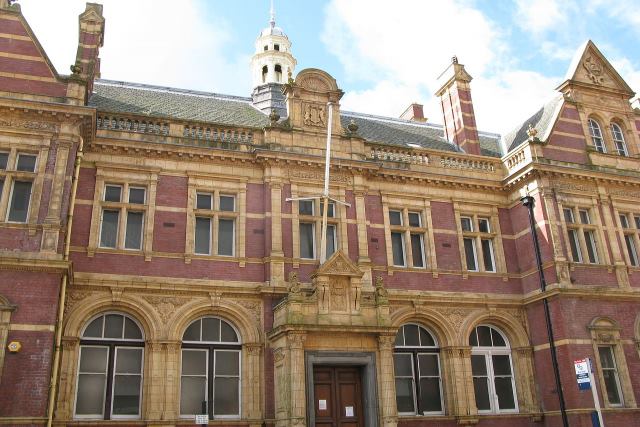
The University of Wolverhampton has a 180-year history, but it gained university status only in 1992. It is a new, modern university that focuses on high-quality teaching, modern facilities, international partnerships, strong business relationships and innovative research. Research Excellence Framework 2014 rated 40% of its research as world-leading and internationally excellent. The university maintains partnerships with more than 1,000 businesses. It is an active participant in regional, national and global development through its contributions to economic development, social justice, fundraising and knowledge exchange. In 2013 the University of Wolverhampton received the “Leadership and Management” award in the knowledge exchange category from Times Higher Education. The university's motto, which also defines the way it works, is “Innovation and Opportunity.” It offers more than 300 programs and is home to about 23,000 students, 95% of whom start work or continue their education within 6 months of graduation. The university helps its students start their own businesses.
Wolverhampton itself is a student city, but its population exceeds 240,000. It has a rich history dating back to 985, when it was founded by Lady Wulfrun. The town first grew as a market center specializing in the wool trade, but during the Industrial Revolution it became one of the main industrial centers thanks to the large deposits of coal and iron ore in the area, as well as the production of steel, motorcycles and cars. The university is located in the city center, which can be crossed on foot in about 30 minutes. Wolverhampton is a friendly and relatively inexpensive city with a variety of clubs, pubs and nightlife that suits every student. One of the city's interesting sights is St Peter's Church, which dates back to the 10th century.
Main programs and majors (For a detailed list, ask one of our consultants)
- Architecture and Built Environment
- Business
- Biology, Chemistry and Forensic Science
- Creative Arts and Design
- Education
- Engineering
- Health
- Humanities
- Law
- Mathematics and Computer Sceince
- Media
- Performing Arts
- Pharmacy
- Psychology
- Public Health, Social Work and Care
- Social, Historical and Political Studies
- Sport
Key information
Program length:
3-4 years for bachelor's programs
1-2 years for master's programs
Academic year:
2 semesters - September and January
Start of the year:
September and January (for some bachelor's and master's programs)
Application deadline:
January 15 is the recommended deadline for most majors. The final cutoff is June 30, but those applications will not be given priority.
March 24 for art and design.
There is no deadline for master's and PhD/doctoral programs, but the university advises applying as early as possible.
Admission requirements:
High school diploma with a GPA of at least 5.0. Master's admission requires a bachelor's degree in a related field and sometimes a specific grade, depending on the major.
IELTS
For bachelor's and master's programs, a minimum of 6.0, except for master's programs in the Faculty of Pharmacy, where the minimum is 6.5.
Cambridge English: Advanced/Proficiency
For bachelor's and master's programs, a minimum of C.
Scholarships and loans
The tuition fee for bachelor's programs is £9000. The UK government provides student loans with favorable repayment terms. Students begin repaying the loan only once they earn an annual salary of more than £21000. For more information, ask one of our consultants.
Master's programs cost between £5750 and £9560. Taking out a loan for them is harder, but not impossible. Doctoral programs cost £3996.
Accommodation:
University residence halls cost between £2775 and £3663 per year, depending on the residence and room type. Private accommodation in the city costs between £2364 and £2382 per year.