
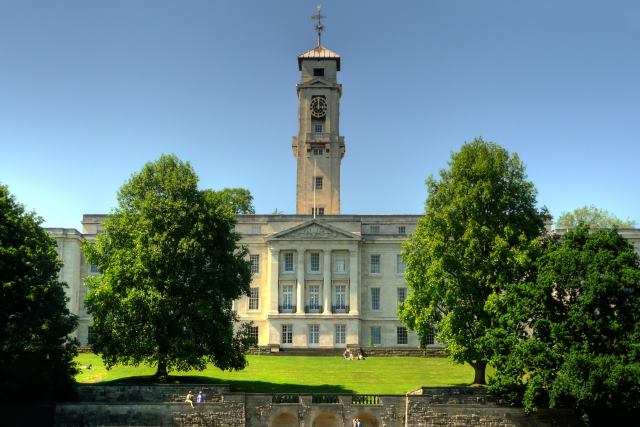
The University of Nottingham is a member of the prestigious Russell Group and its history dates back to 1881, when its first public college opened its doors. It is among the top 1% of universities in the world, ranking 70th in the QS World University Rankings 2015/2016 and 25th in the UK. It is in the top 10 for subjects such as social policy, agriculture, chemical engineering, media, economics, English, food science, law, materials technology, pharmacy, physiotherapy, theology and veterinary medicine. It has won the “University of the Year” and “Entrepreneurial University of the Year” awards. The University of Nottingham ranks 8th for research in the Research Excellence Framework 2014 rankings, with more than 80% of its research considered “world-leading” and “internationally excellent”. 97% of the university's research makes a world-class contribution to the economy, healthcare, culture, public policy and the environment. In 2014 it received the “Research University of the Year” award for the discovery of a new layer in the human eye. The University of Nottingham offers more than 500 majors and is the university with the most students studying abroad through Erasmus programs, maintaining partnerships with more than 320 institutions in over 44 countries.
Nottingham is one of the major cities in central England. It is best known for the legend of Robin Hood, whose income redistribution policy would appeal to any student. The city is also known for its tobacco industry and bicycle manufacturing. It offers various forms of entertainment – there are 2 large theaters, museums, galleries, numerous parks, clubs, pubs and music venues. Nottingham hosts 2 major music festivals every year. A lively and welcoming city, Nottingham easily becomes home to its students, many of whom choose to stay and live there after graduation.
Main programs and majors (For a detailed list, ask one of our consultants)
- American and Canadian Studies
- Archaeology
- Architecture and Built Environment
- Biochemistry
- Biology and Zoology
- Biosciences
- Business
- Chemical and Environmental Engineering
- Chemistry
- Civil Engineering
- Classics
- Computer Science
- Contemporary Chinese Studies
- Culture, Film and Media
- Economics
- Education
- Electrical and Electronic Engineering
- English
- French and Francophone Studies
- Genetics and Human Genetics
- Geography
- German Studies
- History
- History of Art
- Law
- Mathematical Sciences
- Mechanical, Materials and Manufacturing Engineering
- Medical Physiology and Therapeutics
- Medicine
- Midwifery
- Modern Languages
- Music
- Natural Sciences
- Neuroscience
- Nursing
- Pharmacy
- Philosophy
- Physics and Astronomy
- Physiotherapy and Rehabilitation Science
- Politics and International Relations
- Psychology
- Russian and Slavonic Studies
- Sociology and Social Policy
- Spanish, Portuguese and Latin America
- Theology and Religious Studies
- Veterinary Medicine and Science
Key information
Program length:
3-5 years for bachelor's programs
1-2 years for master's programs
Academic year:
2 semesters - September and January
Start of the year:
September (no intake during the rest of the year, except for doctoral programs)
Application deadline:
October 15 for medicine and veterinary medicine
January 15 is the recommended deadline for most majors. The final cutoff is June 30, but those applications will not be given priority.
There is no deadline for master's and PhD/doctoral programs, but the university advises applying as early as possible.
Admission requirements:
High school diploma with a GPA between 5.0 and 6.0, depending on the major. For master's and doctoral programs, a bachelor's or master's degree respectively with a grade of 4-5, depending on the major.
IELTS
For bachelor's and master's programs, between 6.5 and 7.5, depending on the major.
TOEFL
For bachelor's and master's programs, between 79 and 100, depending on the major.
Cambridge English: Advanced/Proficiency
For bachelor's and master's programs, a minimum of between 169 and 190, depending on the major.
Scholarships and loans
The tuition fee for bachelor's programs is £9000. The UK government provides student loans with favorable repayment terms. Students begin repaying the loan only once they earn an annual salary of more than £21000. For more information, ask one of our consultants.
Master's and doctoral programs cost between £3996 and £21000, and doctoral programs £3996-£9510. Taking out a loan for them is harder, but not impossible.
Accommodation:
University residence halls cost between £94 and £203 per week, depending on the residence and room type. Accommodation in a house or apartment that is not part of the university residence halls costs between £3300 and £3900 per year.