
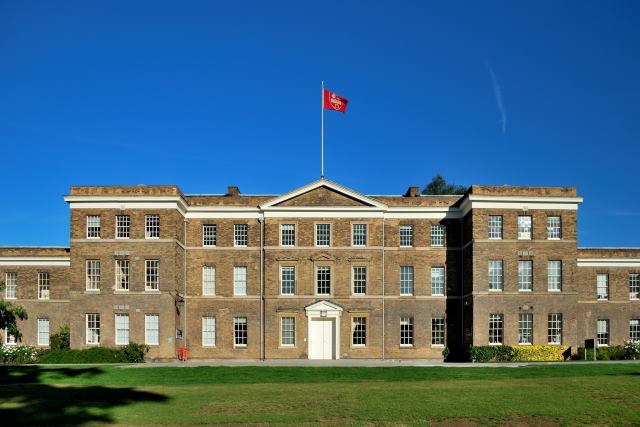
The University of Leicester opened its doors in 1921 but received university status in 1957. It is one of the top universities in the UK, ranked 24th, and the QS World University Rankings 2015/2016 place it 235th in the world. In 2008 it was named University of the Year by Times Higher Education. The university's research has a global impact, with 75% of it rated internationally excellent by the Research Excellence Framework 2014. The university is known for the discovery of genetic fingerprinting, pioneering space missions and the discovery of the remains of King Richard III. The university's research currently focuses on fighting disease, building a safe and just world, exploring human identity and intercultural relations, protecting our planet and understanding the universe, and understanding change in culture, society, the economy and political institutions. The University of Leicester enjoys an international reputation in cardiovascular medicine, physics and space science, economics, engineering, law, historical studies, archaeology, mathematics, genetics and biological sciences. Most courses offer the opportunity to study abroad or to do a year-long placement in industry. 93.4% of graduates go on to work or further study.
Leicester is a compact and welcoming city, rich in green spaces and attractive architecture. Located in the heart of England, it is one of the country's most diverse cities, combining cultural heritage and history with plenty of bars, pubs, restaurants, cafes and shopping centers. According to a 2014 HSBC survey, Leicester is the cheapest city in the UK. The city has the largest covered outdoor fresh food market in Europe. Students from all over the world contribute to the city's diverse cultural atmosphere, making it an attractive destination for student life.
Main programs and majors (For a detailed list, ask one of our advisors)
- American Studies
- Archaeological and Ancient History
- Biological and Medical Sciences
- Chemistry
- Computer Science
- Criminology
- Economics
- Engineering
- English
- Film Studies
- Geography
- Geosciences
- History
- History of Art
- Law
- Management Studies
- Mathematics
- Media and Communication
- Medical and Biological Sciences
- Medicine
- Modern Languages
- Natural Sciences
- Operating Department Practice
- Physics and Astronomy
- Physiotherapy
- Politics and International Relations
- Psychology
- Sociology
Key information
Duration of study:
3-5 years for Bachelor's programs
1-2 years for Master's programs
Academic year:
2 semesters - September and January
Start of the year:
September and January, April and July (for some programs only)
Application deadline:
October 15 for medicine
January 15 is the recommended deadline for most majors. The final cutoff is June 30, but those applications will not be given priority.
There is no deadline for Master's and PhD/doctoral programs, but the university advises applying as early as possible.
Admission requirements:
High school diploma with a minimum GPA of 5, depending on the major. For Master's and doctoral programs, a Bachelor's or Master's degree, respectively, with a grade of at least 4 or 5, depending on the major.
IELTS
For Bachelor's and Master's programs, between 6.0-7.5, depending on the major.
TOEFL
For Bachelor's and Master's programs, between 80-110, depending on the major
Cambridge English: Advanced/Proficiency
For Bachelor's and Master's programs, between 169-191, depending on the major
Scholarships and loans
The tuition fee for Bachelor's programs is £9,000. The UK government provides student loans with favorable repayment terms. Students only start repaying the loan once they earn an annual salary of more than £21,000. For more information, ask one of our advisors.
Master's programs start from £5,470; MBA - £13,500; doctoral programs - £4,052. Getting a loan for them is more difficult, but not impossible.
Accommodation:
University residence halls cost between £3,116 and £7,232 per year, depending on the hall and room type. Accommodation in a house or apartment outside the university residence halls costs between £3,500 and £4,500 per year.