
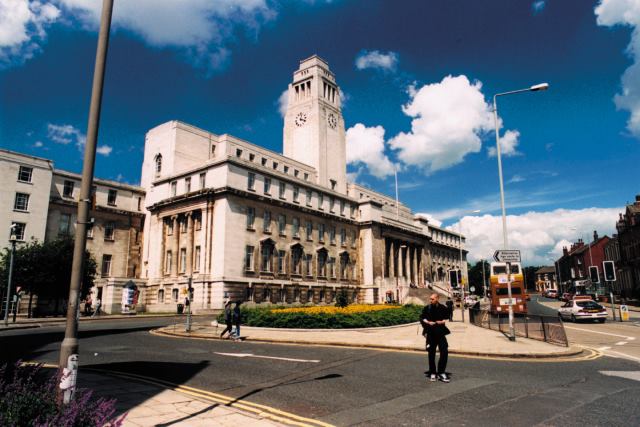
The University of Leeds received university status in 1904 from King Edward VII, but its history goes back to 1831. It is a member of the prestigious Russell Group and is ranked 19th in the UK and 93rd in the QS World University Rankings 2019. The Research Excellence Framework 2018 (REF) rated 80% of the university's research as world-leading or internationally excellent and placed it in the top 10 for research power. Research areas in which the University of Leeds is strong include energy, water, cities, culture, food and engineering. The university is the best for marketing and is in the top 10 for accounting and finance, art and design, speech therapy, communication and media studies, electronic engineering, food science, mechanical engineering, medical technology, Middle Eastern and African studies, social policy and sports science. The University of Leeds has partnerships with over 300 institutions worldwide, and many of its students take advantage of the opportunity for an Erasmus exchange. The university offers work placements and a range of volunteering opportunities.
The city of Leeds, where the university is located, is the third largest city in the UK, and its history goes back to the 5th century. In the 17th and 18th centuries, Leeds became a center for the production and trade of wool. During the Industrial Revolution, the city became a major manufacturer of textiles, mainly woolen goods. Today Leeds is the commercial, financial and cultural center of West Yorkshire, with more law and accounting firms than any other city in the UK outside London. It is home to 4 universities and is the 4th city in the country by number of students.
Main programs and majors (For a detailed list, ask one of our advisors)
- Accounting and Finance
- Actuarial Mathematics
- Advanced Psychology
- Aeronautical and Aerospace Engineering
- Ancient History
- Applied Computer Science
- Arabic and Islamic Studies
- Architectural Engineering
- Art and Design
- Art Gallery and Museum Studies
- Asia Pacific Studies
- Automotive Engineering
- Aviation Technology with Pilot Studies
- Biochemistry
- Biological Sciences
- Biology
- Broadcast Journalistm
- Business Studies
- Chemical Engineering
- Chemistry
- Childhood Studies
- Communication and Media
- Computer Science
- Criminal Justice and Criminology
- Cultural and Media Studies
- Dental Hygiene and Dental Therapy
- Design with Integrated International Foundation Year
- Digital Media
- Ecology and Environmental Biology
- Economics
- Economics and Finance
- Economics and Management
- Electronic Engineering
- English Language and Literature
- Environment and Business
- Environmental Science
- Fashion Design
- Fine Art
- Food Science
- Genetics
- Geography
- Geological Sciences
- Geophysical Sciences
- Graphic and Communication Design
- History
- History of Art
- Human Physiology
- Human Resources
- International Business
- International Relations
- Law
- Liberal Arts
- Linguistics and Phonetics
- Management
- Mathematics
- Mechanical Engineering
- Mechatronics and Robotics
- Medical Biochemistry
- Medical Engineering
- Medical Microbiology
- Medical Science
- Microbiology
- Midwiefery
- Molecular Medicine
- Music
- Neuroscience
- Petroleum Engineering
- Pharmacology
- Philosophy
- Physics
- Politics
- Product Design
- Psychology
- Social Policy
- Social Work
- Sociology
- Sports and Exercise Sciences
- Sustainability and Environmental Management
- Textile Design
- Theatre and Performance
- Theoretical Physics
- Zoology
Key information
Duration of study:
3-5 years for Bachelor's programs
1-2 years for Master's programs
Academic year:
2 semesters - September and January
Start of the year:
September and January (for some programs only)
Admission deadline:
October 15 for medicine and dentistry.
January 15 is the recommended deadline for most majors. The final cutoff is June 30, but those applications will not be given priority.
For Master's programs the deadline is August 31, except for Accounting and Finance, Banking and International Finance, Financial Risk Management, and Finance and Investment, for which the deadline is June 30. The university recommends applying as early as possible.
Admission requirements:
High school diploma with a minimum GPA of between 5.4 and 5.6, depending on the major; the university may also require grades between 4.7 and 6 in specific subjects. For Master's and doctoral admission, a Bachelor's or Master's degree, respectively, with a minimum grade of 5.0, depending on the major.
IELTS
For Bachelor's programs, a minimum of 6.0, depending on the major. For Master's programs, 6.5.
TOEFL
For Bachelor's programs, a minimum of 87, depending on the major. For Master's programs, 92.
Cambridge English: Advanced/Proficiency
For Bachelor's programs, a minimum of 169, depending on the major. For Master's programs, 176.
Scholarships and loans
The tuition fee for Bachelor's programs is £9,000. The UK government provides student loans with favorable repayment terms. Students only start repaying the loan once they earn an annual salary of more than £21,000. For more information, ask one of our advisors.
Master's programs range from £5,500 to £17,750; Executive MBA - £18,000 and MBA - £25,000; doctoral programs around £4,100.
Accommodation:
University residence halls cost between £81 and £191 per week, depending on the hall and room type. Accommodation outside the university residence halls can cost between £3,300 and £3,900.