
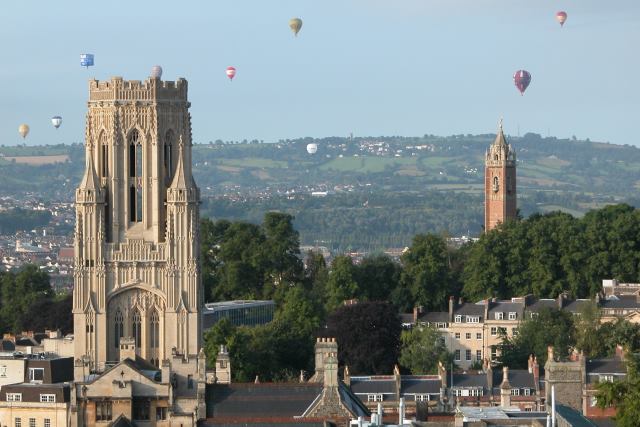
The University of Bristol was established in 1876 as University College, Bristol. It was the first higher education institution to admit women on equal terms with men. The modern University of Bristol opened its doors in 1909 and gradually built a reputation as an institution of great academic strength and commitment to high-quality education. A member of the prestigious Russell Group, the university is in the top 5 for research, with 79% of it rated "world-leading" or "internationally excellent". The University of Bristol is ranked 49th in the QS World University Rankings 2019/2020 and 9th in the UK. It is the best university in the country for studying social policy and is in the top 10 for manufacturing engineering, chemistry, ancient history, drama, economics, electronic engineering, geography, geology, history, law, mathematics, music, philosophy, psychology, sociology, theology, veterinary medicine and more. Many majors offer the option of a work placement and Erasmus. The university's alumni include 13 Nobel Prize winners and well-known actors, athletes, engineers, journalists, writers and entrepreneurs, perhaps the most famous being Hollywood actor Simon Pegg. The University of Bristol is home to more than 29,000 students.
Bristol is a city in South West England with a population of 437,500. Between the 13th and 18th centuries it was among the top 3 English cities by tax revenue. Its fame has always been linked to the sea, and many expeditions to the New World set out from its port, one of them led by John Cabot - the first European to land in North America. Bristol was overshadowed during the Industrial Revolution by Birmingham, Liverpool and Manchester, but now, with support from the National Lottery and other funding projects, the city is buzzing with life thanks to its many harborside venues, museums and galleries. It was also named England's first Cycling City in 2008, and in 2015 it won the European Green Capital award. The city's thriving economy means higher prices and more expensive housing, but compared to other cities in the region it is more affordable. Bristol is one of England's 6 Science Cities and welcomes students with open arms.
Main programs and majors (For a detailed list, ask one of our advisors)
- Accounting and Finance
- Aerospace
- Ancient History
- Animal Behaviour
- Anthropology
- Archaeology
- Biochemistry
- Biology
- Cancer Biology and Immunology
- Cellular and Molecular Medicine
- Chemical Physics
- Chemistry
- Childhood Studies
- Classical Studies
- Computer Science
- Dentistry
- Economics
- Engineering
- English Studies
- Environmental Geosciences
- Film Studies
- Geography
- Geology
- Geology
- Geophysics
- History of Art
- Law
- Liberal Arts
- Management
- Mathematics
- Medical Studies
- Modern Languages
- Music
- Neuroscience
- Paleontology and Evolution
- Pharmacology
- Philosophy
- Physics
- Politics
- Psychology
- Religion and Theology
- Social Sciences
- Sociology
- Theatre Studies
- Veterinary Science
- Zoology
Key information
Duration of study:
2-5 years for Bachelor's programs
1-2 years for Master's programs
Academic year:
2 semesters - September and January
Start of the year:
September and January (for some Master's programs)
Admission deadline:
October 15 for veterinary medicine and dentistry.
January 15 is the recommended deadline for most majors. The final cutoff is June 30, but those applications will not be given priority.
There is no deadline for Master's and PhD/doctoral programs, but the university advises applying as early as possible.
Admission requirements:
High school diploma with a GPA of at least 5.3, depending on the major. Master's admission requires a Bachelor's degree at least equivalent to a UK Upper Second Class degree, again depending on the major.
IELTS
For Bachelor's and Master's programs, between 6.0-7.5, depending on the major.
TOEFL
For Bachelor's and Master's programs, between 86-109, depending on the major
Cambridge English: Advanced/Proficiency
For Bachelor's and Master's programs, between 169-191, depending on the major
Scholarships and loans
The tuition fee for Bachelor's programs is £9,000. The UK government provides student loans with favorable repayment terms. Students only start repaying the loan once they earn an annual salary of more than £21,000. For more information, ask one of our advisors.
Master's programs range from £6,300 to £9,700. Getting a loan for them is more difficult, but not impossible.
Accommodation:
University residence halls cost between £2,953 and £7,014 per year, depending on the hall and room type. Private accommodation in the city costs £250-£412 per week.