
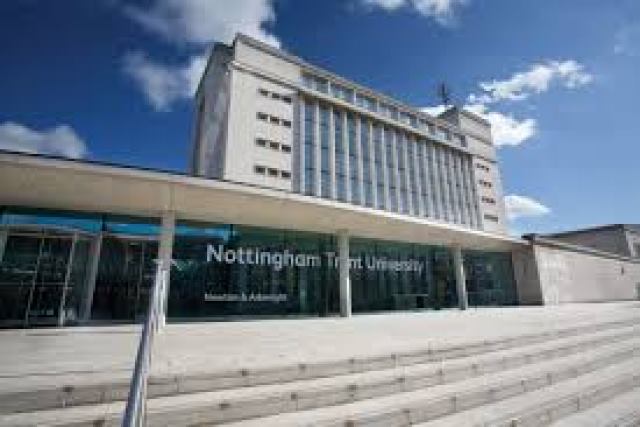
The history of Nottingham Trent University began in 1843, when the Nottingham Government School of Design opened its doors, but it gained university status in 1992. It ranks 53rd in the UK and 701st in the QS World University Rankings 2015/2016. The subjects for which it is in the top 10 are building surveying and real estate, and information management and librarianship. In 2008 it was named “Top Post-1992 University” by The Complete University Guide. Research Excellence Framework 2014 rated 55% of the university's research as “world-leading” and “internationally excellent.” It strives to prepare students for their professional lives and works with more than 6,000 businesses and public and private sector organizations. Nottingham Trent is in the top 10 universities for the number of students taking part in one-year placement programs. It is no coincidence that it is one of the best universities in England and Wales for graduate employment, with 93% of all graduates starting work or continuing their education within 6 months of receiving their bachelor's degree.
Nottingham is one of the major cities in central England. It is best known for the legend of Robin Hood, whose income redistribution policy would appeal to any student. The city is also known for its tobacco industry and bicycle manufacturing. It offers various forms of entertainment – there are 2 large theaters, museums, galleries, numerous parks, clubs, pubs and music venues. Nottingham hosts 2 major music festivals every year. A lively and welcoming city, Nottingham easily becomes home to its students, many of whom choose to stay and live there after graduation.
Main programs and majors (For a detailed list, ask one of our consultants)
- Accounting
- Art and Design
- Business Management
- Childhood and youth
- Communication
- Computing
- Construction
- Criminology
- Economics
- Education
- Engineering
- English
- Environment
- Finance
- Geography
- Health Care
- History
- Horticulture
- International Studies
- Journalism
- Languages
- Law
- Linguistics
- Marketing
- Maths
- Media
- Philosophy
- Politics
- Property Management
- Psychology
- Sciences
- Social Care
- Sociology
- Sports Science
- Surveying
- Teacher Training
Key information
Program length:
3-4 years for bachelor's programs
1-2 years for master's programs
Academic year:
2 semesters - September and January
Start of the year:
September (no intake during the rest of the year, except for doctoral programs)
Application deadline:
March 24 for art and design
January 15 is the recommended deadline for most majors. The final cutoff is June 30, but those applications will not be given priority.
There is no deadline for master's and PhD/doctoral programs, but the university advises applying as early as possible.
Admission requirements:
High school diploma with a GPA between 4.5 and 5.0, depending on the major. For master's and doctoral programs, a bachelor's or master's degree respectively with a grade of 4-4.5, depending on the major.
IELTS
For bachelor's programs, between 6.0 and 7.0, depending on the major. For master's programs, between 6.5 and 7.5, depending on the major
TOEFL
For bachelor's programs, between 76 and 90, depending on the major. For master's programs, between 83 and 100, depending on the major
Cambridge English: Advanced/Proficiency
For bachelor's and master's programs, a minimum of C, depending on the major.
Scholarships and loans
The tuition fee for bachelor's programs is £9000. The UK government provides student loans with favorable repayment terms. Students begin repaying the loan only once they earn an annual salary of more than £21000. For more information, ask one of our consultants.
Accommodation:
University residence halls cost between £4000 and £5800 per year, depending on the residence and room type. Accommodation in a house or apartment that is not part of the university residence halls costs between £2900 and £3900 per year.