
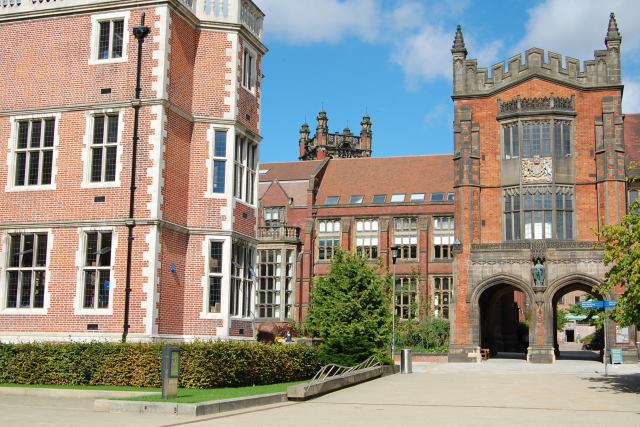
Newcastle University is a member of the prestigious Russell Group and has a history as an educational institution dating back to 1834. As a world-class public university, it focuses on the social problems facing society today. Some of its key contributions are in the fields of health and aging (preventing inherited diseases through IVF), sustainability and renewables (research into renewable energy sources) and social well-being. The university offers a variety of extracurricular activities that allow students to develop skills that are important in the workplace. Newcastle University is ranked 26th in the UK and 146th in the QS World University Rankings 2019/2020. In 2018 it was ranked 1st by Rough Guides and 2nd in the WhatUni Student Choice Awards. Subjects in which it is in the UK top 10 are medicine, engineering, social sciences, and arts and humanities. The university offers over 200 Bachelor's programs, as well as the amazing opportunity for students to learn a foreign language free of charge. Many programs include a work placement and the option of an Erasmus exchange in 21 countries.
Newcastle is a metropolitan city in North East England with a rich history dating back to the 11th century. In the 14th century it was an important center of the wool trade, and in the 16th century one of the main port cities for shipbuilding. Today it is home to many different industries and businesses, contributing £13 billion to the UK's gross value added. Newcastle can satisfy almost every taste - from cultural attractions such as galleries, museums and theaters to a lively and varied nightlife. Just 15 minutes from the city center, you can enjoy the stunning coastline or the tranquility of the countryside. Some of the city's icons are its football club Newcastle United F.C., Newcastle Brown Ale and the bridges over the River Tyne.
Main programs and majors (For a detailed list, ask one of our advisors)
- Accounting and Finance
- Agri-Business Management
- Agriculture
- Ancient History
- Animal Science
- Archaeology
- Architecture
- Biochemistry
- Biology and Zoology
- Biomedical and Bimolecular Sciences
- Business Management
- Chemical Engineering
- Chemistry
- Civil Engineering
- Classics and Ancient History
- Computing Science
- Dentistry
- Earth Science
- Economics
- Education
- Electrical and Electronic Engineering
- English Literature, Language and Linguistics
- Environmental and Rural Studies
- Exercise Biomedicine
- Film Studies
- Fine Art
- Genetics
- Geography
- Geomatics
- History
- History of Art
- Journalism
- Law
- Linguistics
- Marine Sciences
- Marine Technology
- Marketing
- Mathematics and Statistics
- Mechanical and Systems Engineering
- Media, Communication and Cultural Studies
- Medicine
- Modern Languages
- Music
- Nutrition and Food
- Pharmacology
- Philosophy
- Physics
- Physiological Sciences
- Politics
- Psychology
- Sociology
- Speech and Language Sciences
- Surveying and Mapping Science
- Urban Planning
- Zoology
Key information
Duration of study:
3-4 years for Bachelor's programs
1-2 years for Master's programs
Academic year:
2 semesters - September and January
Start of the year:
September and January (for some Master's programs)
Application deadline:
October 15 for medicine
January 15 is the recommended deadline for most majors. Final cutoff June 30, but those applications will not be given priority.
There is no deadline for Master's and PhD/doctoral programs, but the university advises applying as early as possible.
This does not apply to Medicine, Dentistry and Veterinary Studies, with a deadline of October 15; Social Work and Nursing - January; Music Performance - January 15
Admission requirements:
High school diploma.
IELTS
For Bachelor's and Master's programs, a minimum of 6.5-7.5, depending on the major.
Cambridge English: Advanced/Proficiency
For Bachelor's and Master's programs, a minimum of between 176 and 185, depending on the major.
Scholarships and loans
The tuition fee for Bachelor's programs is £9,000. The UK government provides student loans with favorable repayment terms. Students only start repaying the loan once they earn an annual salary of more than £21,000. For more information, ask one of our advisors.
Master's and doctoral programs cost between £5,500 and £14,825. Getting a loan for them is more difficult, but not impossible.
Accommodation:
University residence halls cost from £106 per week, depending on the hall and room type. Accommodation in a house or apartment outside the university residence halls starts from £85 per week