
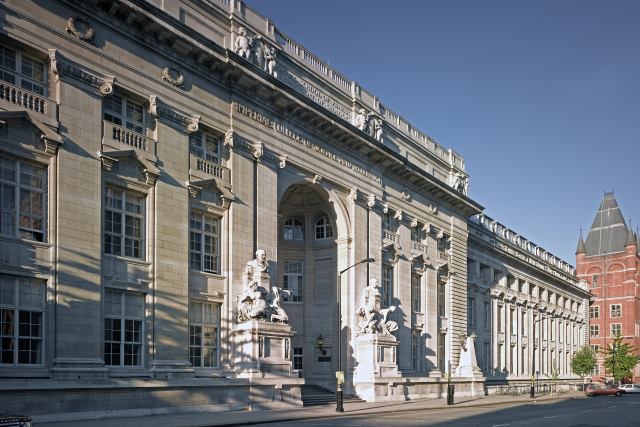
Imperial College London
London, England
Imperial College London was founded in 1907 and for more than 100 years has offered excellent, world-renowned academic education. It is ranked 4th in the UK, and the QS World University Rankings 2015/2016 place it 8th. The university is known for the discovery of penicillin, the development of holography and the foundations of fiber optics. It is one of the top universities for research quality, with the Research Excellence Framework 2014 (REF) rating 91% of its research as world-leading or internationally excellent. Its research currently focuses on improving global health, climate change, the development of renewable energy sources and addressing security challenges. Imperial College London is at the forefront of scientific, engineering and medical research and is committed to the practical application of that research. It is among the top 10 universities for manufacturing engineering, biological sciences, chemical engineering, chemistry, computer science, electronics and electrical engineering, geology, mathematics, materials technology, mechanical engineering, medicine and physics. Some programs offer the opportunity for an Erasmus exchange or a year-long placement in industry.
London is the capital and largest city of the UK. The history of London and its landmarks cannot be described in a few sentences, but the city is undoubtedly one of the most sought-after travel destinations in the world. It has it all - pubs or parks, theaters or cinemas, shopping or sightseeing, museums or art galleries - London has something for every taste. Life in the capital, however, may seem a bit expensive for the average student, especially when it comes to housing. The fast-paced lifestyle can both excite you and wear you out, but if you can find a balance between enjoying life and not going broke at the same time, London is the ideal place to be a student.
Main programs and majors (For a detailed list, ask one of our advisors)
- Aeronautical Engineering
- Aeronautics with Spacecraft Engineering
- Aerospace Materials
- Biochemistry
- Biological Sciences
- Biomedical Engineering
- Biomedical Science
- Biotechnology
- Chemical Engineering
- Chemistry
- Civil Engineering
- Computing
- Design Engineering
- Ecology and Environmental Biology
- Electrical and Electronic Engineering
- Geology
- Geophysics
- Materials Science and Engineering
- Mathematics
- Mechanical Engineering
- Medicine
- Microbiology
- Petroleum Geosciences
- Physics
Key information
Duration of study:
3-5 years for Bachelor's programs
1-2 years for Master's programs
Academic year:
2 semesters - September and January
Start of the year:
September and January (for some programs only)
Admission deadline:
October 15 for medicine
October 15 for medicine. BioMedical Admissions Test - November 15; registration for the test closes on October 1.
There is no deadline for Master's and PhD/doctoral programs, but the university advises applying as early as possible.
Admission requirements:
High school diploma with a minimum GPA of between 5.6 and 5.8, depending on the major. For Master's and doctoral admission, a Bachelor's or Master's degree with a minimum grade of 4.0.
IELTS
For Bachelor's and Master's programs, a minimum of between 6.5 and 7.0, depending on the major.
TOEFL
For Bachelor's and Master's programs, a minimum of between 92 and 100, depending on the major.
Cambridge English: Advanced/Proficiency
For Bachelor's and Master's programs, a minimum of between 176 and 185, depending on the major.
Scholarships and loans
The tuition fee for Bachelor's programs is £9,000. The UK government provides student loans with favorable repayment terms. Students only start repaying the loan once they earn an annual salary of more than £21,000.
Master's programs range from £4,750 to £10,000; MBA - £39,000, Part-time Global MBA - £33,000, Part-time EMBA - £46,000; doctoral programs - £4,053-£12,250
Accommodation:
University residence halls cost between £2,994 and £9,221 per year, depending on the hall and room type. Accommodation outside the university residence halls can cost between £4,300 and £11,475.